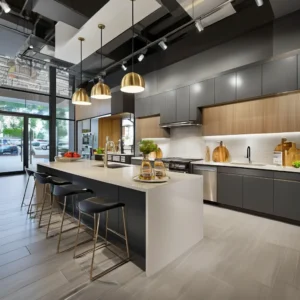
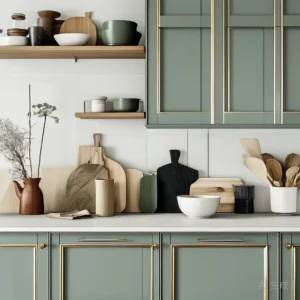
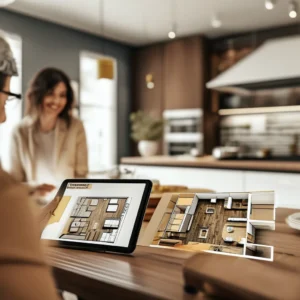
When you start a kitchen, bath, or closet remodel, one question comes up before any style or color decision: should you buy stock cabinets or go custom? It is the single most consequential choice in a cabinetry project, because it sets the limits on fit, material quality, storage, and long-term value before you spend a dollar.
This guide breaks down the difference between stock, semi-custom, and fully custom cabinets, compares them on the factors that actually matter, and shows you how to decide which route fits your space and budget.
What Are Stock, Semi-Custom, and Custom Cabinets?
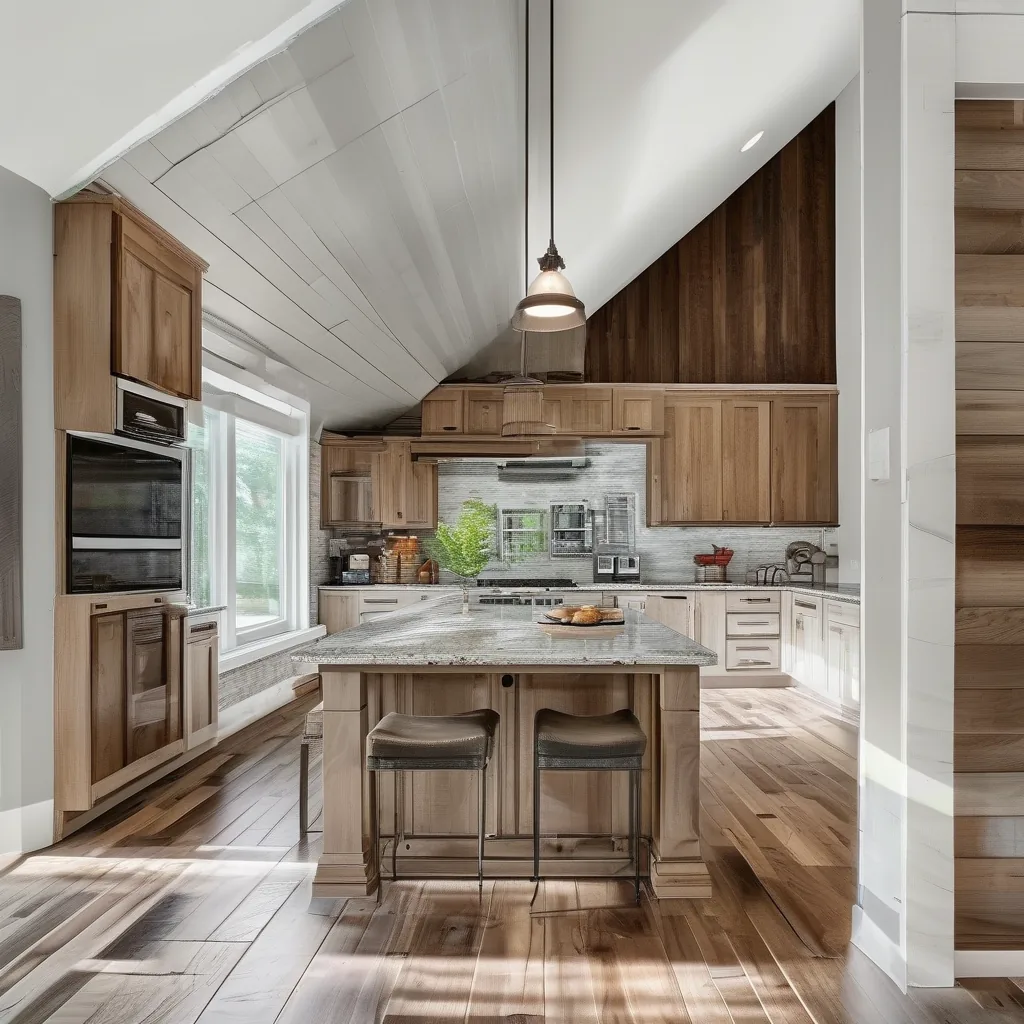
The cabinet market is usually described in three tiers, and the names can be confusing because “custom” gets used loosely.
- Stock cabinets are mass-produced in fixed sizes, styles, and finishes. You pick from a catalog and the units ship from a warehouse. They are the fastest and cheapest option, but you adapt your room to the cabinets rather than the other way around.
- Semi-custom cabinets start from stock lines but offer a limited set of width, depth, and finish variations. You get a bit more flexibility on sizing and detailing without a full bespoke build.
- Fully custom cabinets are built to your exact dimensions, layout, material, finish, and hardware specification. Every panel is cut for the room it will live in, which is why custom work can follow any wall, ceiling, or appliance geometry.
If you want the deepest dive on one of these tiers, our RTA vs. full-custom cabinets guide covers the ready-to-assemble angle for North American buyers.
Custom vs Stock: The Side-by-Side Comparison
| Factor | Stock / Semi-Custom | Fully Custom |
|---|---|---|
| Dimensional fit | Fixed increments; gaps filled with fillers or toe-kick tricks | Built to the millimeter for walls, ceilings, and corners |
| Material control | Limited board and finish options | E1-grade board, lacquer, wood veneer, and more, specified per project |
| Hardware quality | Bundled, often basic | Specified soft-close hinges and drawers from brands like Blum, OPK, Nuomi |
| Storage efficiency | Standard boxes; dead corners common | Purpose-built pull-outs, dividers, and corner solutions |
| Design freedom | Catalog styles only | Any door style, color, and configuration |
| Lead time | Days to a few weeks | Typically longer, planned around your project |
| Upfront cost | Lowest | Higher per unit, but less waste and rework |
| Long-term value | Functional, replaceable | Built to last; supports whole-home cohesion |
The headline trade-off is simple: stock saves money and time up front; custom spends more time and budget to eliminate compromise.
When Stock Cabinets Make Sense
Stock and semi-custom cabinets are a reasonable fit when:
- Your room is a straightforward rectangle with standard ceiling heights and no awkward corners.
- You are working to a tight move-in deadline and need cabinets in hand this week.
- The layout is a simple repeat (a basic rental upgrade, a laundry room, a mudroom).
- You are comfortable accepting catalog finishes and standard storage.
For compact, standard-shaped rooms, even a custom approach can borrow stock logic. Our small-kitchen cabinet guide shows how tight spaces are planned regardless of build method.
When Custom Cabinets Win
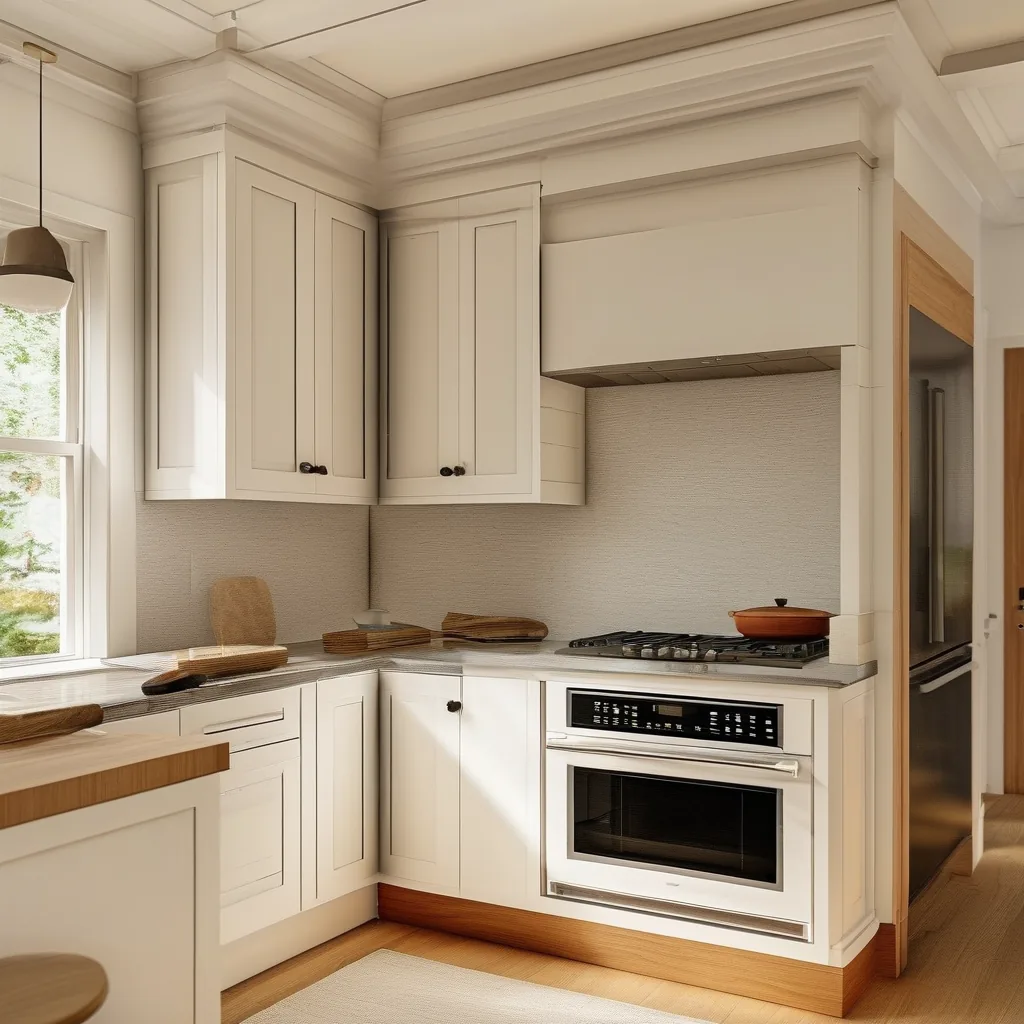
Custom cabinetry earns its keep in situations stock simply cannot handle:
- Irregular architecture. Sloped ceilings, out-of-square corners, radiators, pipes, and structural columns are normal in older and custom homes. Custom boxes wrap around them instead of leaving dead space.
- Maximum storage per square foot. Because every inch is specified, custom planning turns awkward gaps into usable drawers and pull-outs.
- Whole-home cohesion. Matching the kitchen, wardrobe, y bathroom vanity to one material and finish language is a custom-only outcome.
- Specific material and hardware standards. If you need E1 low-emission board, a particular lacquer sheen, or soft-close hardware from a named brand, custom is the only path. Our cabinet materials guide y hardware systems guide explain the options.
- Long-term value. A fitted, durable installation reads as permanent and intentional, which matters for both daily use and resale.
How Custom Cabinets Are Built
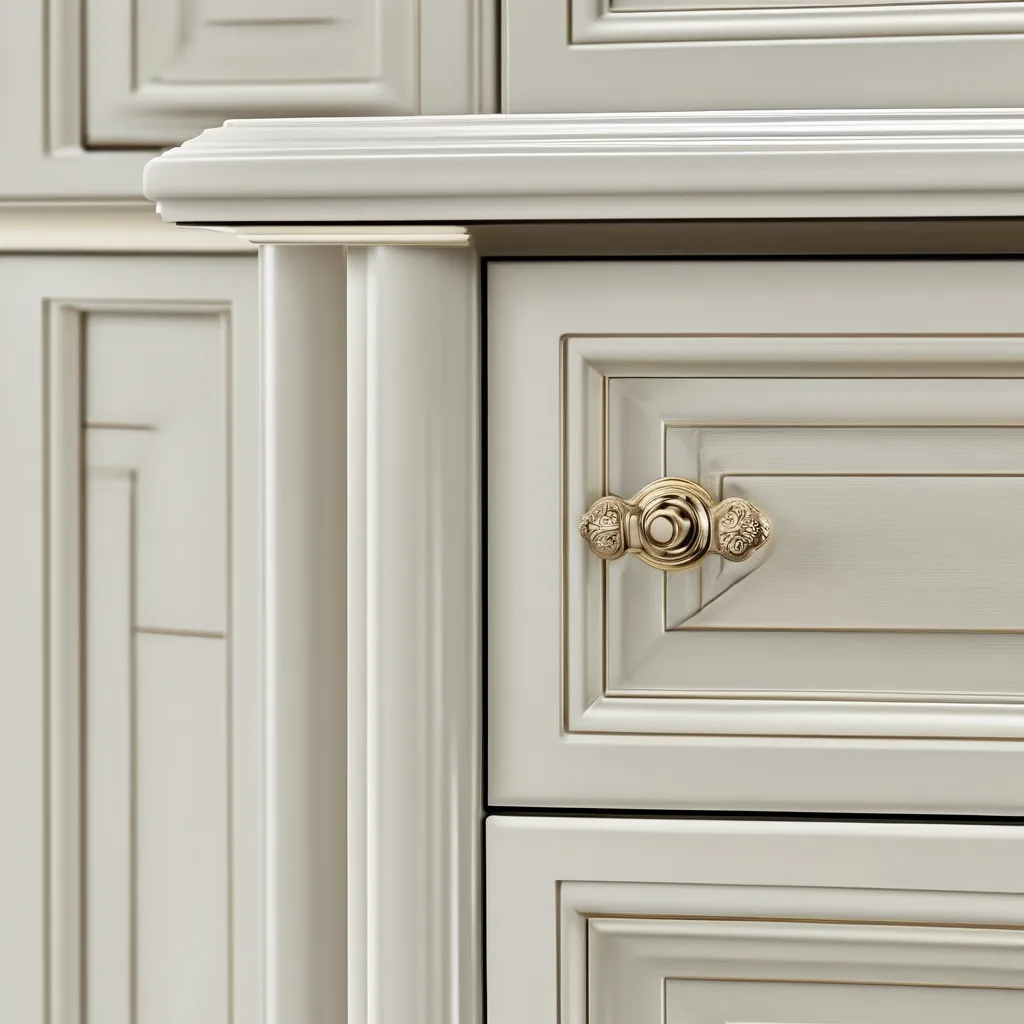
Understanding the build process explains why custom costs more and lasts longer. A typical full-custom workflow runs from a measured plan to a pre-assembled, quality-checked shipment:
- Measure and plan. A precise site survey (our measuring guide walks through it) captures every dimension and obstacle.
- 3D design. The layout is modeled so you can see the result before production.
- Specify materials and hardware. Board, finish, door style, and fittings are chosen per the project.
- Precision production. CNC-driven cutting and automated lines hold tolerances tight.
- Pre-shipment assembly and QA. Cabinets are test-built before they leave the factory, which is how a disciplined manufacturer keeps error rates extremely low.
- Delivery and installation support.
Because custom cabinets are built around your layout and work zones, the design step is where most of the value is created.
Common Myths About Custom Cabinets
A few persistent myths stop people from even pricing custom work.
- “Custom always blows the budget.” Not necessarily. Because custom fits the room, you avoid fillers, rework, and early replacement. A clear quotation checklist helps you compare like for like.
- “Custom takes forever.” Lead time is longer than grabbing stock, but it is planned. With a factory running 10 industrial lines and 200,000+ units a year, volume production keeps schedules predictable.
- “Custom is only for mansions.” Custom is for any room with non-standard dimensions, which is most real homes. A small apartment with one awkward corner benefits as much as a large villa.
- “All custom looks the same.” Quite the opposite: custom lets you pick door styles y colors and finishes instead of being locked to a catalog.
How to Decide: A Quick Checklist
Ask yourself these questions:
- Are my walls, ceilings, or corners not perfectly square? → Lean custom.
- Do I want one finish across kitchen, closet, and bath? → Custom.
- Is a specific board grade or hardware brand required? → Custom.
- Am I on a strict weeks-long deadline with a standard room? → Stock may win.
- Is resale value and longevity a priority? → Custom tends to pay back.
If most answers point to custom, the next step is a measured plan and a quoted design rather than a showroom catalog.
Why Choose YIDA for Custom Cabinets
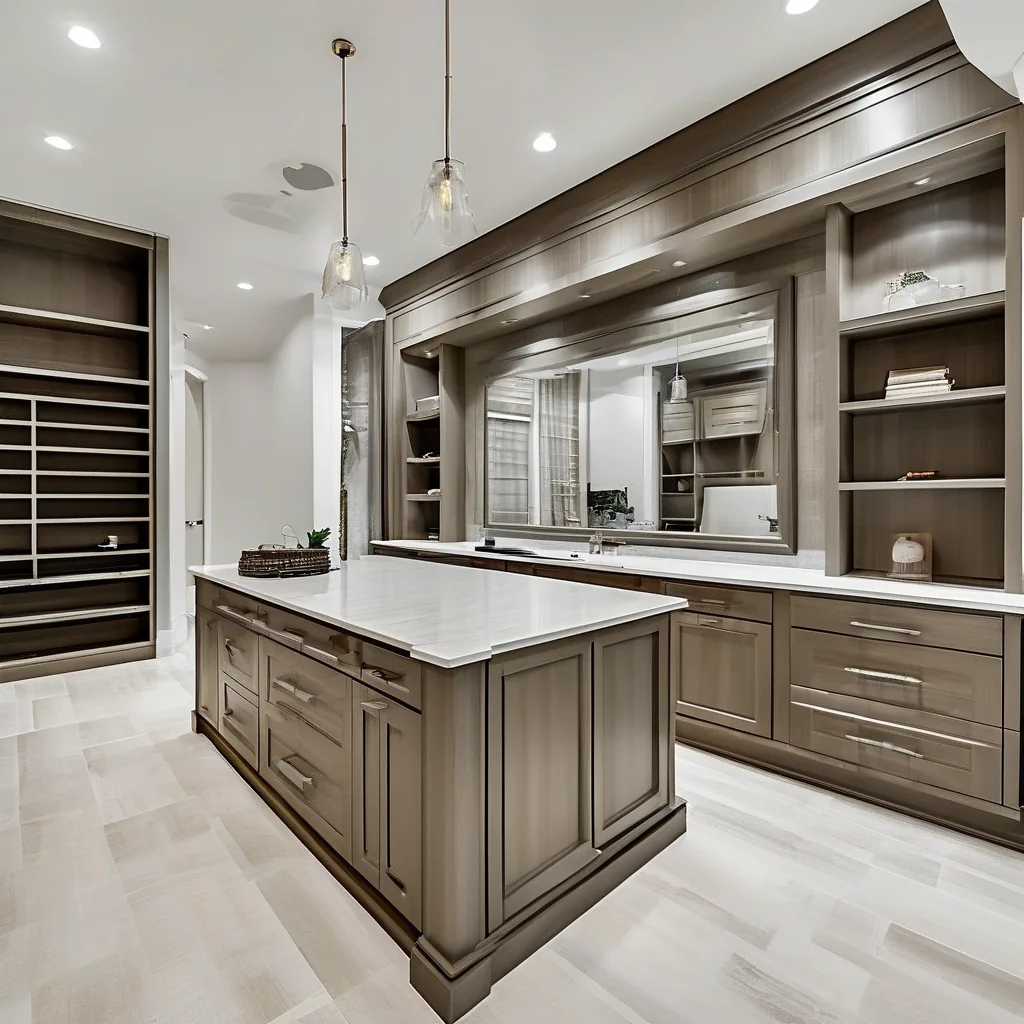
YIDA Kitchen builds fully custom cabinetry from an 80,000 m2 Foshan facility with 10 industrial 4.0 production lines and an annual capacity above 200,000 units. Every project is test-assembled before shipment, a pre-shipment practice that helps hold production error rates to as low as 0.1%.
What that means for your project:
- Material standards: E1 low-emission board with matte lacquer, BMW-grade high-gloss lacquer, or wood veneer finishes.
- Hardware: soft-close hinges and drawers from Blum, OPK, and Nuomi.
- Whole-home scope: kitchen, wardrobe, and bathroom vanity designed as one system.
- Design support: send a floor plan and receive a free 3D design and a quotation within 24 hours.
Send your project details and floor plan to start: request a free 3D design and quote. Explore real completed work in our projects gallery.
Custom versus stock is not a question of “better” in the abstract, it is a question of fit, standards, and value for your specific room. For standard boxes in a hurry, stock is pragmatic. For rooms that are actually rooms, with corners, character, and a long horizon, custom is the choice that removes compromise.