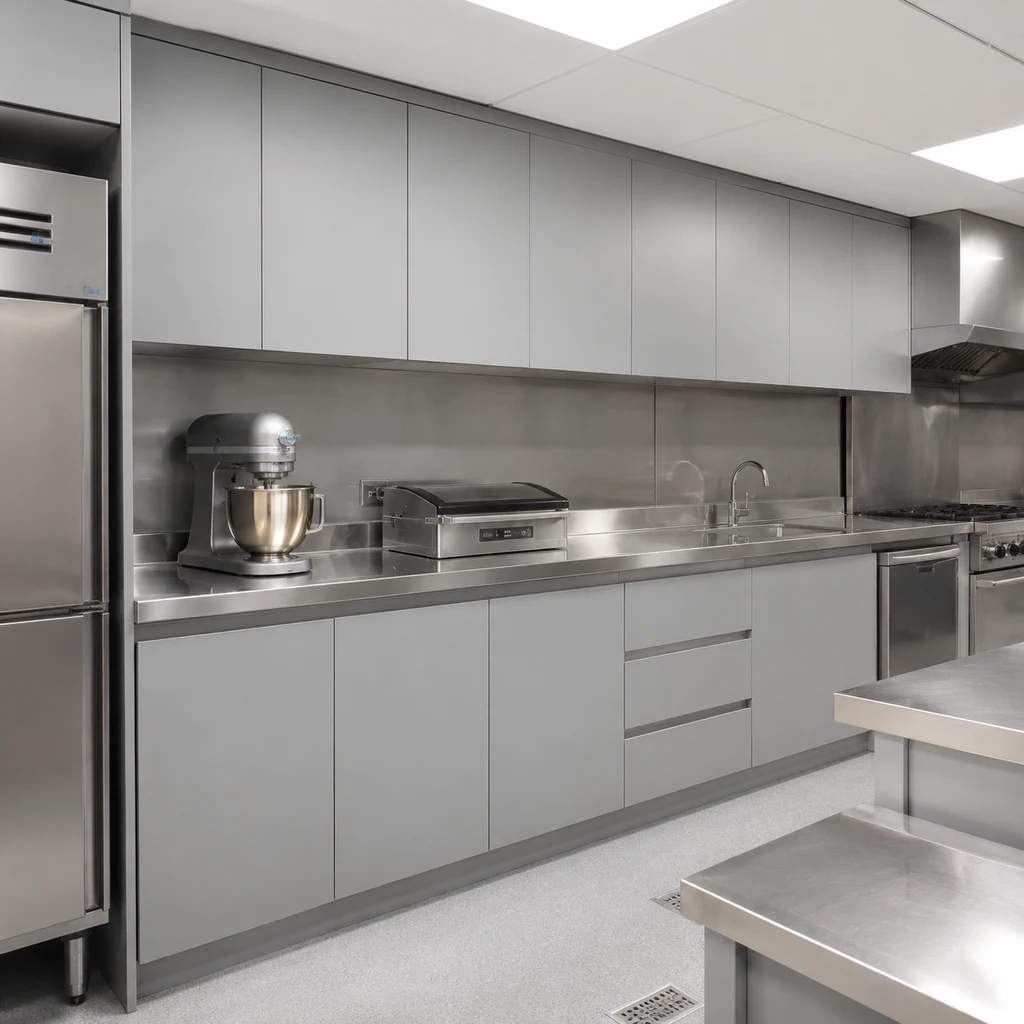
Commercial kitchen cabinets are not domestic cabinets made bigger. A restaurant, hotel or staff kitchen puts them through a harder regimen: constant cleaning chemicals, heavy daily use, high heat, grease, and hygiene inspections that do not care how good a door looks. Specify them like furniture and they fail early; specify them like equipment and they last for years.
This guide is for contractors, hospitality buyers and facility managers sourcing commercial kitchen cabinets — what to specify, how to plan the workflow, and how to buy direct from a manufacturer without sacrificing compliance. For a lighter introduction to the key features, see our 5 key features of commercial kitchen cabinets; this guide goes deeper on sourcing and specification.
Start With the Workflow, Not the Cabinets

In a commercial kitchen, the layout is a workflow diagram before it is a design. Map the path from delivery to storage to prep to cooking to washing, and let that drive where cabinets go.
- Zone by task. Keep dry storage near delivery, cold storage near prep, and cleaning stations near the wash-up area. Cabinets should support the sequence, not interrupt it.
- Separate clean and dirty flows. Health inspectors look for cross-contamination. Where possible, dedicate sinks and storage to raw versus ready-to-eat.
- Allow for equipment clearances. Fridges, ovens and dishwashers need ventilation gaps and service access. A cabinet that traps a compressor will cause failures.
- Think about cleaning. Smooth, seamless surfaces and sealed junctions wipe down fast. Open shelving collects grease; enclosed cabinets with minimal joints are easier to keep compliant.
If the project also involves a customer-facing bar or servery, the same hygiene rules apply front-of-house — the visible cabinetry has to meet the same standards as the back.
Materials and Hygiene Specifications
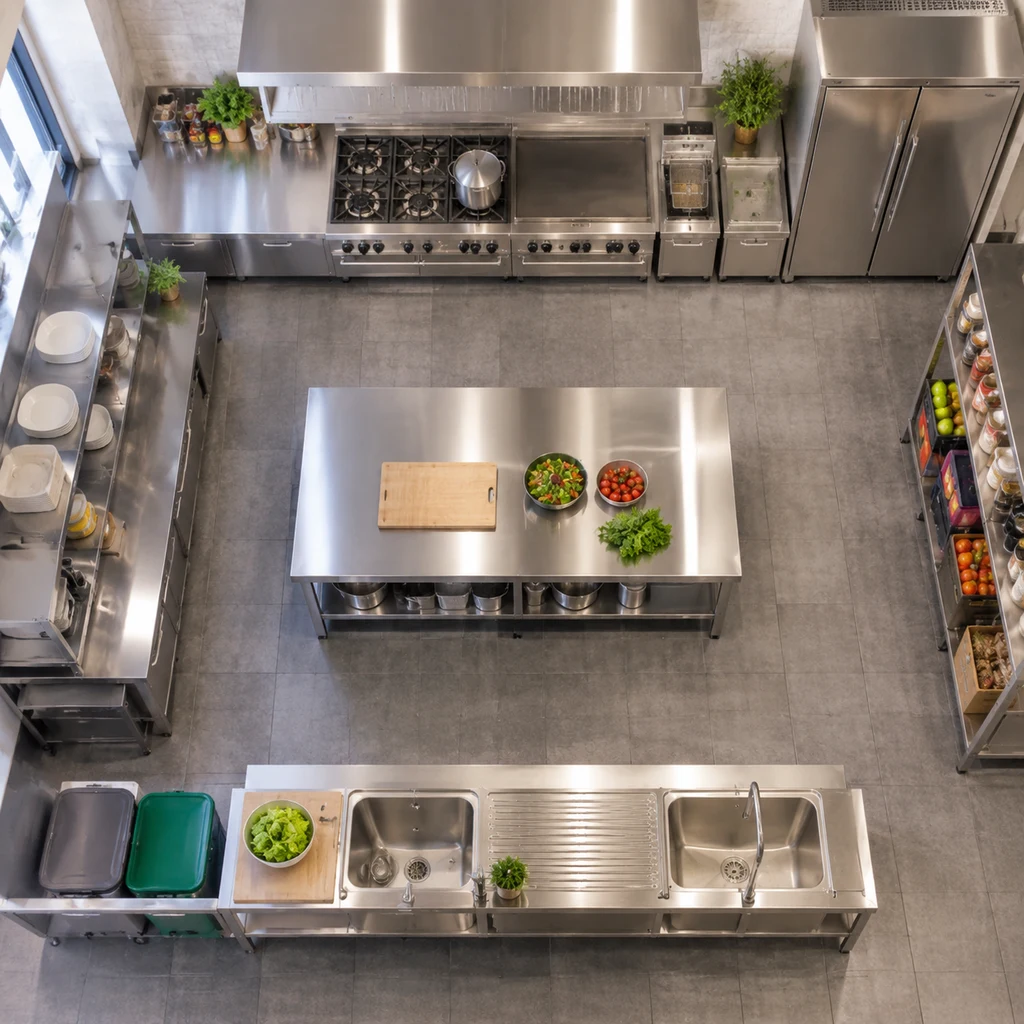
Commercial specification is driven by durability and cleanability, not by appearance alone.
| Component | Recommended spec | Por qué |
|---|---|---|
| Worktops | Stainless steel or sealed stone / solid surface | Non-porous, heat and chemical resistant |
| Carcass | E1 plywood or stainless in wet zones | Resists swelling and repeated wet/dry cleaning |
| Fronts | Matte lacquer, baking paint or stainless | Wipes clean; hides wear better than gloss |
| Hardware | 304 stainless hinges and handles | Resists corrosion and frequent sanitiser use |
| Edges & seals | PUR/laser banding, sealed backs | No gaps for moisture or bacteria to collect |
For wet zones and outdoor or high-humidity sites, the same waterproofing principles that protect a bathroom vanity apply — edge sealing, raised sealed bases and stainless hardware are non-negotiable. Our guide to cabinet materials compared explains the trade-offs in detail.
Fire and compliance: Check local fire ratings for cabinetry and finishes in commercial kitchens. Requirements vary by jurisdiction and by the type of cooking (open flame, fryers, etc.). Ask your supplier for test certificates rather than verbal assurances.
Hardware Built for Heavy Daily Use
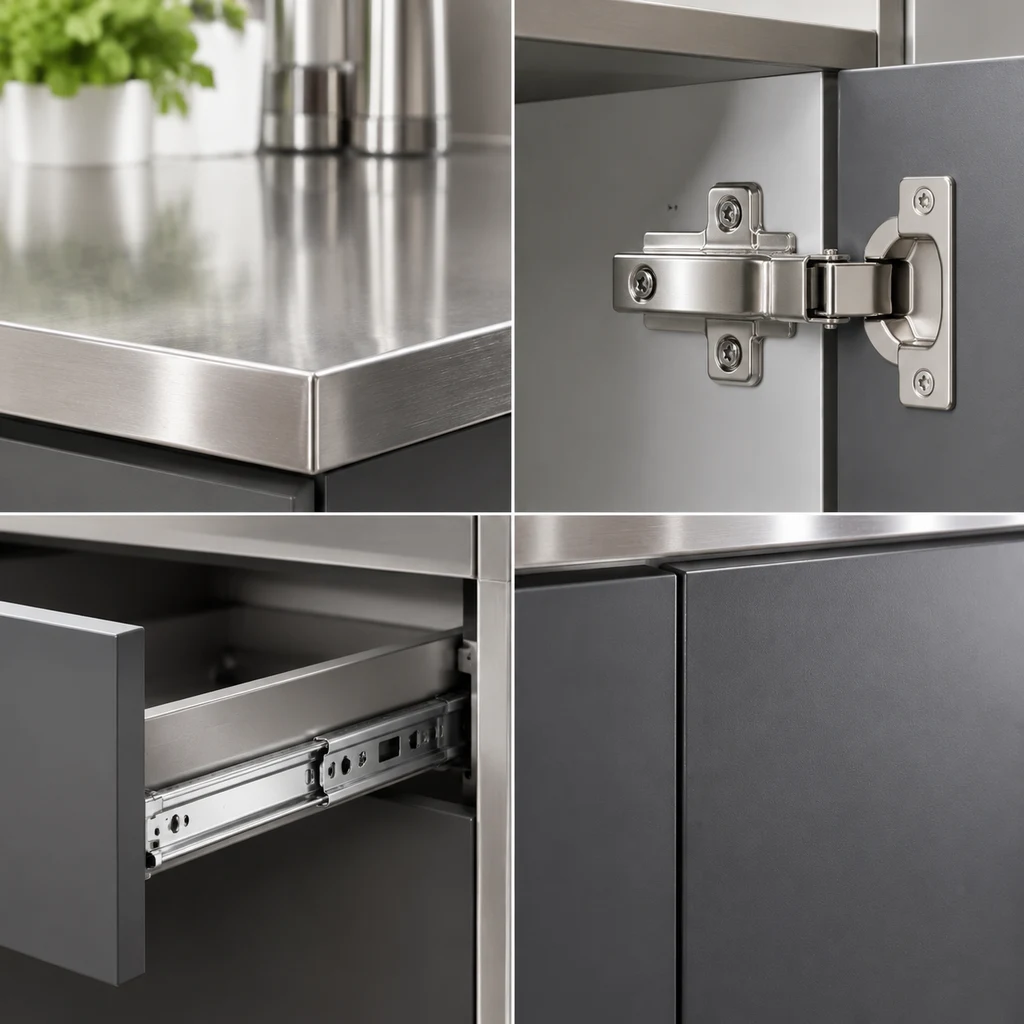
Domestic soft-close hinges are not designed for a door opened 200 times a day. Commercial kitchens need commercial-duty hardware:
- 304 stainless hinges and pulls that survive sanitiser and moisture.
- Heavy-duty drawer runners rated for higher loads — a drawer of cutlery or dry goods is heavier than it looks.
- Simple, replaceable fittings. In a commercial setting, hardware will eventually need swapping; choose systems where a single component can be changed without rebuilding the cabinet.
YIDA specifies Blum-class, OPK and Nuomi hardware programs built for high-use environments, and can advise on the right grade for each zone of the kitchen.
Buying Direct: Cost, Lead Time and Customisation
Project budgets are where factory-direct sourcing proves its value. Buying commercial kitchen cabinets from a manufacturer removes the distributor and showroom margins that inflate a fitted-out kitchen. It also buys you two things a catalogue cannot: non-standard sizes for awkward sites, and batch consistency across a multi-unit order.
A credible supplier should put the following in writing:
- Material and finish schedule per zone (including fire-rated or stainless requirements).
- Hardware specification with brand and load ratings.
- Production and delivery lead time, split into manufacturing, shipping and on-site stages.
- Certifications relevant to the market — ISO certification as a baseline, and local compliance such as SASO for Saudi projects.
YIDA is an ISO-certified Foshan manufacturer with 15+ years of experience, 15,000+ completed projects across 80+ markets, and SASO certification for Saudi Arabia. Group manufacturing and showroom space totals about 200,000 m², with Middle East facilities supporting regional delivery. For contractors managing several sites, that combination of capacity and direct pricing is hard to beat.
Getting a Project Quote
Send your floor plan, equipment schedule and any compliance requirements through the contact page or email yidakitchen@gmail.com. A factory-direct quote on a complete specification is the fastest way to test whether a commercial kitchen fits your budget — before you commit to a fit-out date.
Frequently Asked Questions
Are commercial kitchen cabinets different from domestic ones?
Yes. They use heavier hardware, non-porous worktops, sealed edges and corrosion-resistant fittings to survive chemicals, heat and high use.
What worktop is best for a commercial kitchen?
Stainless steel is the default for wet and prep zones; sealed stone or solid surface works where appearance matters, provided it meets local hygiene and heat requirements.
Can I order custom sizes for an awkward site?
Yes — that is a key advantage of factory-direct sourcing. Cabinets are cut to your measurements and equipment clearances rather than stock sizes.
What certifications should a supplier provide?
At minimum, ISO certification and test certificates for finishes and fire ratings, plus local market compliance such as SASO for Saudi Arabia.