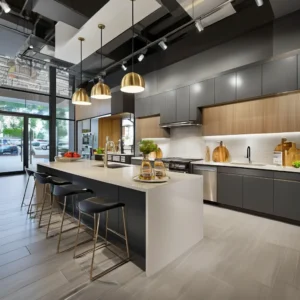
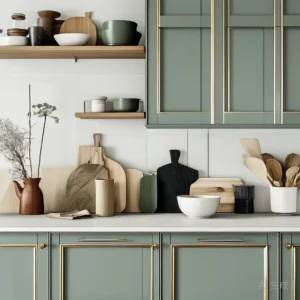
The cabinet door is the largest visible surface in a kitchen, so the style you pick does more to set the room’s character than the countertop or the floor. Yet it’s often the last thing buyers think about. In a custom build you’re not limited to what a showroom stocks — you can specify the door profile, the material, and the finish independently, which means the door style becomes a real design decision rather than a take-it-or-leave-it option. This guide walks through the main kitchen cabinet door styles, how they read in a room, and which materials and finishes suit each.
Why Door Style Sets the Tone
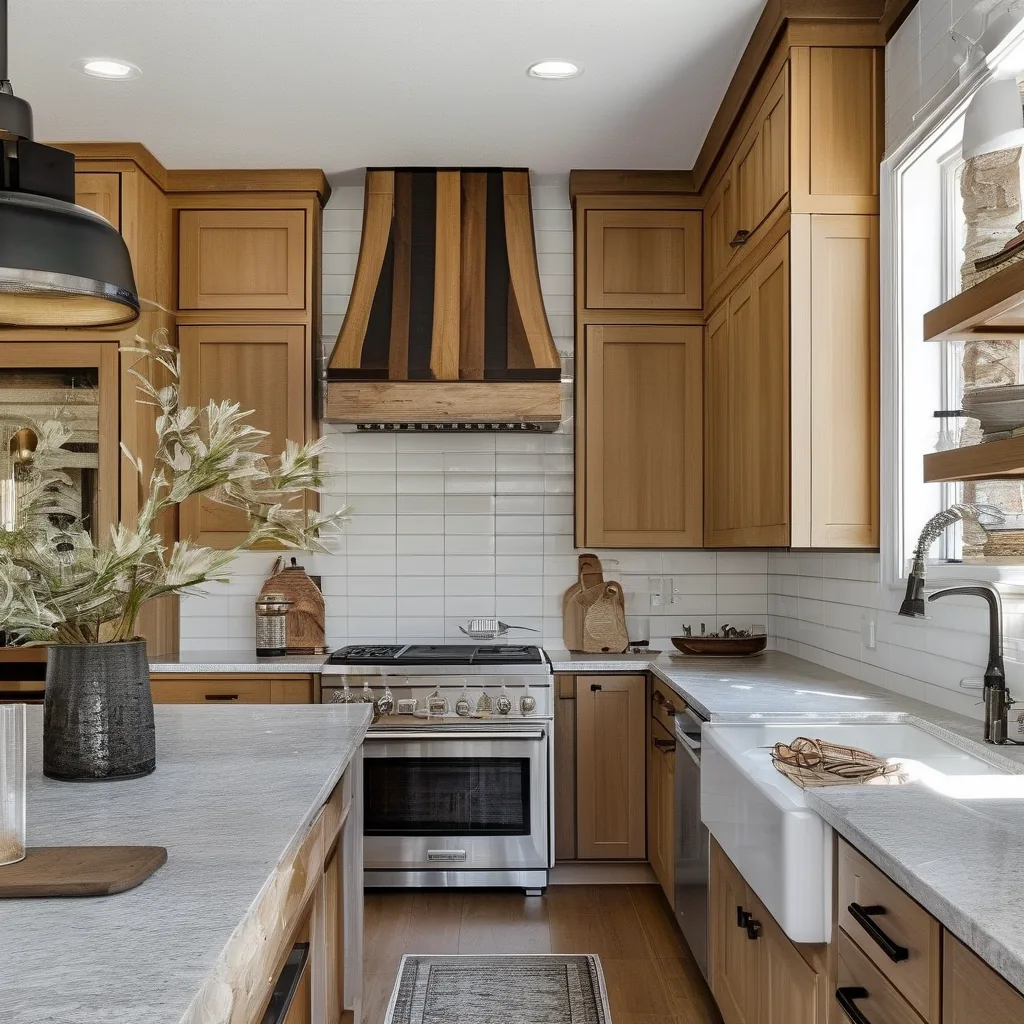
A door front carries the eye across the whole kitchen. A recessed Shaker frame reads calm and timeless; a flat slab reads minimal and modern; a raised panel reads traditional. Because the fronts are everywhere you look, the style quietly decides whether the kitchen feels classic, contemporary, or somewhere in between — long before anyone notices the hardware.
The Main Door Styles
| Style | How it reads | Best for |
|---|---|---|
| Shaker | Recessed center panel, clean lines, timeless | Transitional, farmhouse, modern — the safe versatile choice |
| Flat-panel (slab) | One flat surface, no framing, minimal | Modern and open-concept; great handle-less |
| Raised-panel | Center panel raised with beveled edges, ornament | Traditional and classical kitchens |
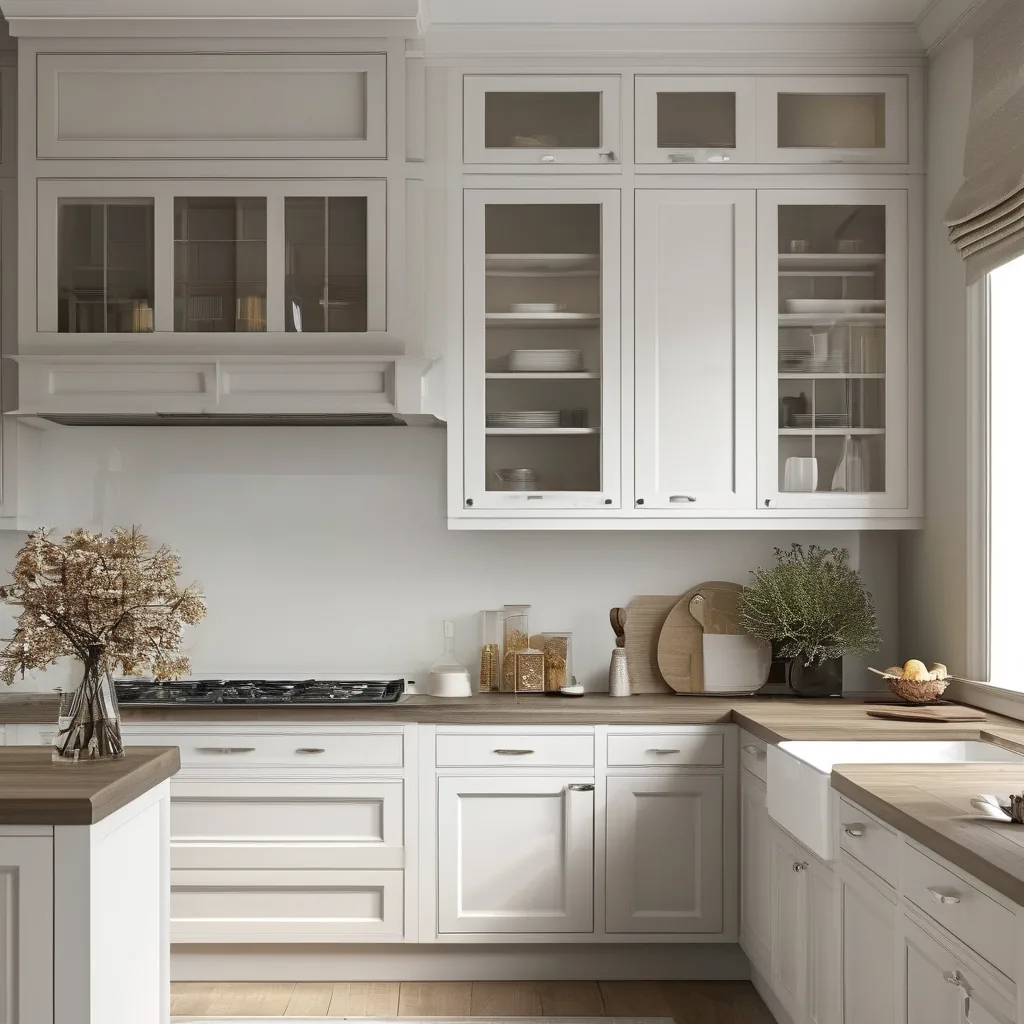
| Glass-front | Doors with glass insert instead of panel | Display cabinets; opens up small kitchens |
| Open shelving | No door at all — exposed shelves | Casual, airy look; trades hidden storage |
Shaker is the workhorse: a simple framed front that suits almost any finish and reads as “intentional” rather than trendy. Flat-panel (slab) fronts are the modern counterpoint — a single clean plane that disappears into the wall, ideal for handle-less push-to-open hardware. Raised-panel fronts add shadow and ornament for a more classical feel. Glass-front doors turn a run of upper cabinets into display, and open shelving drops the door entirely for a lighter, more casual room (at the cost of dust and visual clutter).
Matching Style to Material and Finish
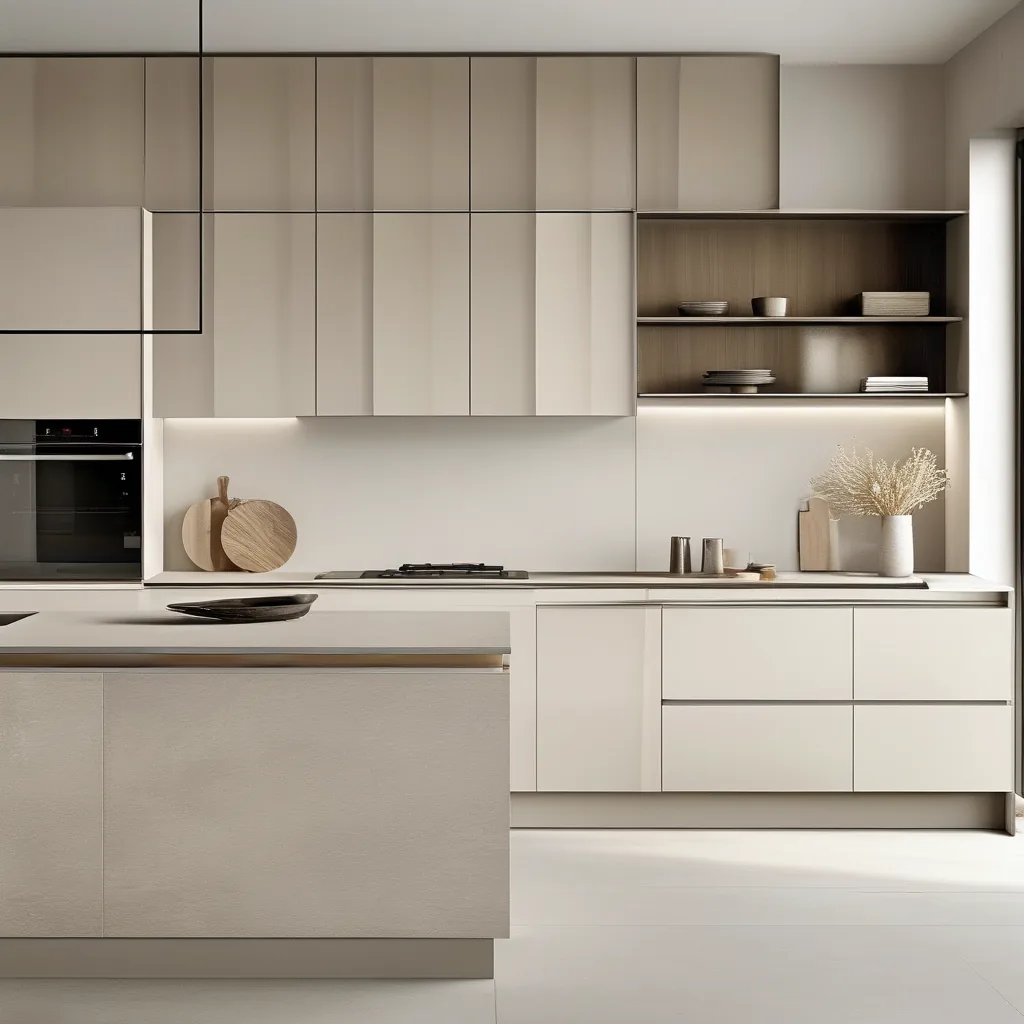
Because YIDA builds on E1-grade board with matte lacquer, baking paint (high-gloss), and veneer fronts, the same door style can land in very different places depending on the finish:
- Matte lacquer + slab or Shaker → crisp, contemporary, and forgiving of fingerprints in a high-traffic kitchen.
- Baking paint (high-gloss) + slab or Shaker → a luxe, reflective surface that amplifies light — the look behind the black-matte-and-gold and high-gloss programs.
- Veneer + Shaker or raised-panel → real wood grain for warmth, leaning traditional or Scandinavian.
The trade-offs between these fronts — how each wears, cleans, and holds up — are covered in the kitchen cabinet materials guide, and the full color and finish menu is in the 2026 cabinet colors and finishes guide.
Pairing the Door with Hardware
The door style decides the hardware story:
- Shaker works with almost anything — cup pulls and knobs for a traditional lean, or slim bar pulls for a modern one.
- Slab suits handle-less (push-to-open) or discreet edge pulls, keeping the front uninterrupted.
- Glass-front and raised-panel read best with refined knobs or small pulls that don’t fight the detail.
Soft-close hinges and full-extension slides — the Blum-class, OPK, and Nuomi programs YIDA specifies — keep every door and drawer feeling solid regardless of style. The options are detailed in the hardware and storage systems guide.
Choosing by Room and Layout
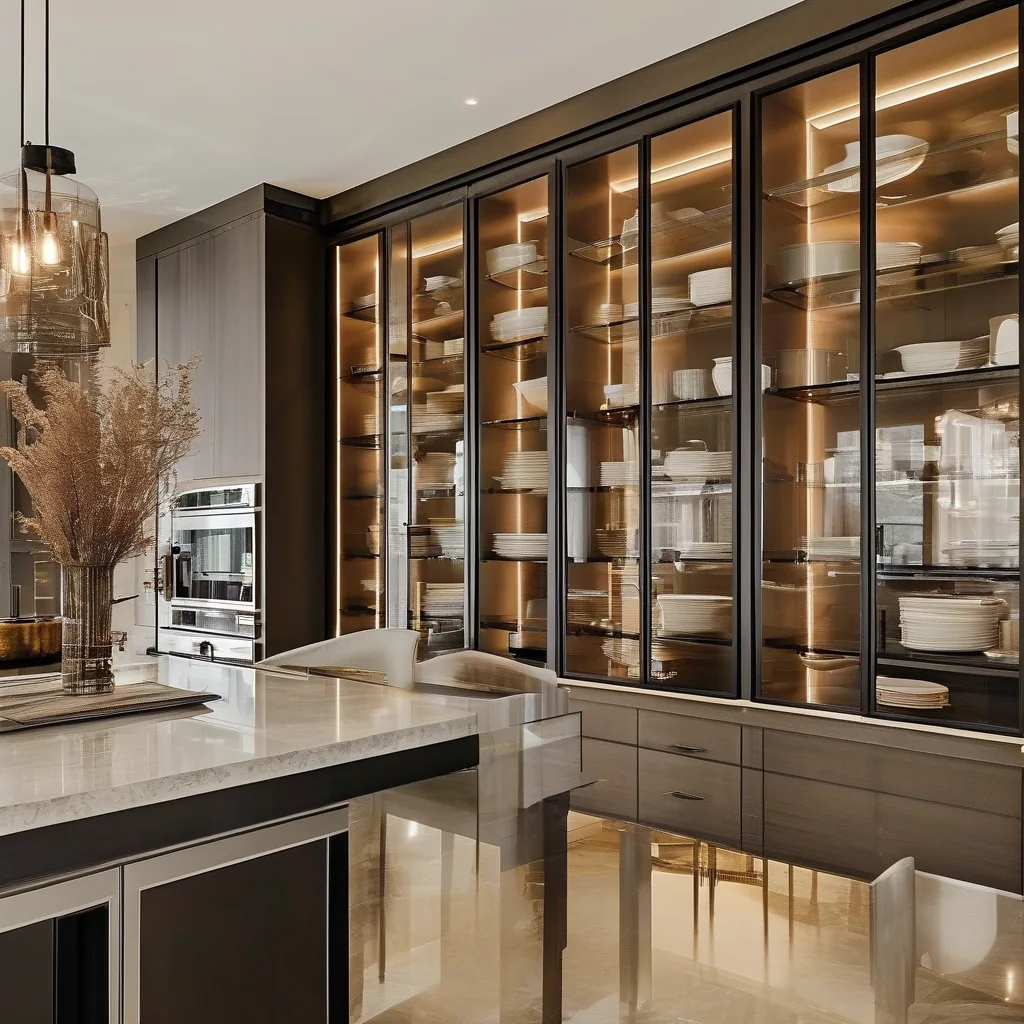
The right front changes with the space:
- Small or compact kitchens → flat slab fronts in a light matte finish reduce visual seams and make the room feel larger. See the small-space guide for the layout side.
- Islands → the island is viewed from all sides, so it’s the place to make a statement front — a contrasting slab or a bold color against a calmer perimeter. The kitchen island ideas cover the layout.
- Whole-home coordination → the same door language can run through the kitchen, the wardrobe, and the bathroom vanity for a consistent home.
Designing Your Doors with YIDA
Custom manufacturing means you’re not locked to one door across the whole house — a slab island against Shaker perimeter cabinets is a common, effective mix. To get it right:
- Pick the profile (Shaker, slab, raised, glass) per zone.
- Pick the material and finish (matte lacquer / baking paint / veneer on E1 board).
- Specify the hardware (handle-less, bar pull, cup pull, knob).
- Send the floor plan for a free 3D design that shows the doors in your actual room before production.
Because every door is built and checked through 100% pre-shipment trial assembly, error rates stay near 0.1% — so the profile you approved is the profile that ships. Send your project details and floor plan via the contact page for a 3D design and quotation within 24 hours.