Custom Kitchen Uppers
Have you ever looked up at your kitchen cabinets and noticed an awkward gap below the ceiling? According to real estate experts, this “dust gap” is a cleaning nightmare that diminishes the visual height and appraisal value of your home.
Think of eye-level storage like living room display furniture rather than basic boxes. Standard depths notoriously fail to hold oversized modern serving platters.
Beyond the 12-Inch Box: How Height and Depth Adjustments Solve Real Storage Problems
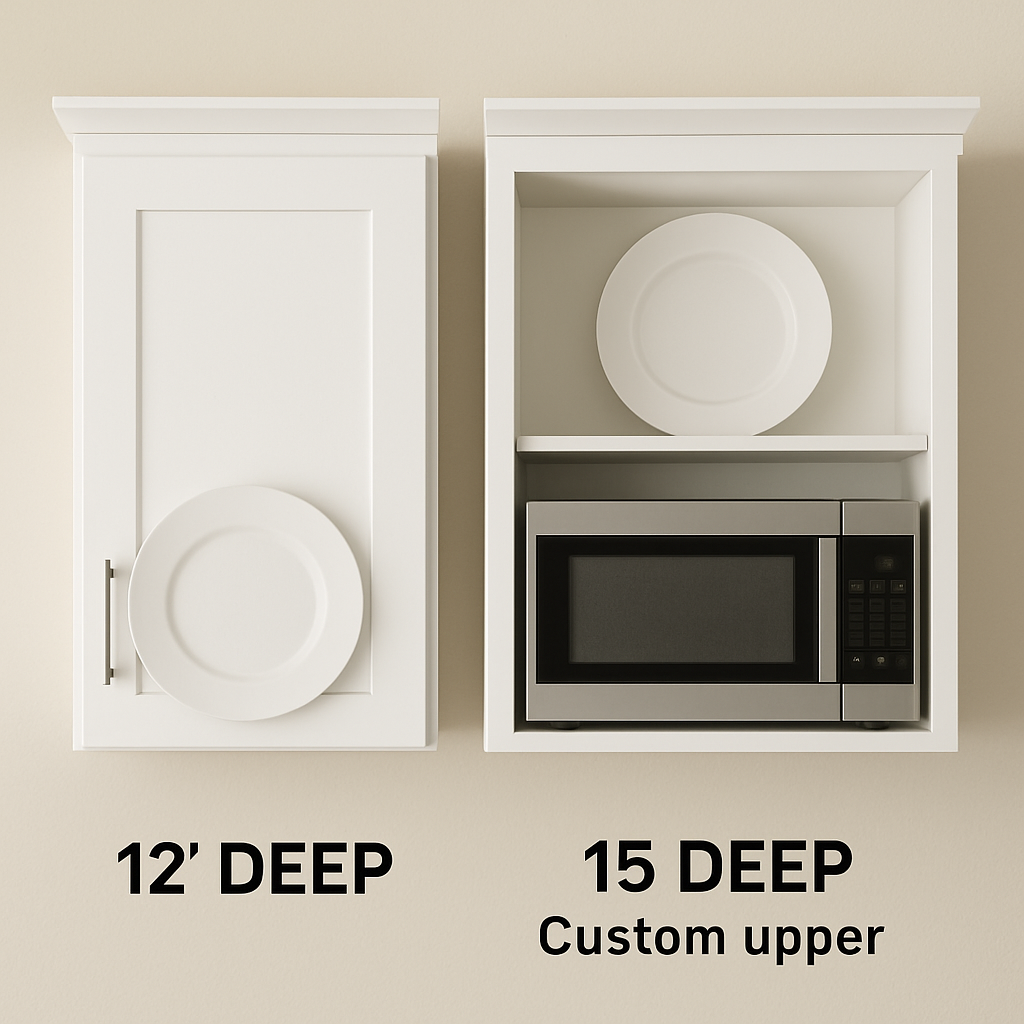
Closing a cabinet door over a large dinner plate, only to hear it hit the wood, is a common frustration. Standard upper cabinet depth and height dimensions often fall short, typically stopping at just 12 inches deep. Upgrading to a 15-inch depth transforms your space, easily hiding bulky microwaves and oversized serving platters.
Reclaiming vertical space is where customization truly shines. Many older homes feature soffits—those bulky drywall boxes above cabinets that waste valuable real estate. Removing them allows for tall wall cabinets that stretch upward. To make these tall kitchen wall cabinets look perfectly built-in against a slightly uneven ceiling, designers use scribe molding, a thin piece of trim that seamlessly hides any gaps.
Your chosen vertical layout completely dictates your overall storage capacity:
- 30-Inch Standard: Leaves an awkward, dust-collecting gap below 8-foot ceilings.
- 42-Inch Tall: Reaches an 8-foot ceiling beautifully, adding an entire extra shelf for holiday platters.
- Ceiling-Height: Uses stacked kitchen cabinets (smaller display boxes placed directly on top of standard ones) to touch 9-foot ceilings elegantly.
All this newly acquired room is a massive aesthetic victory, but retrieving items from the very top presents a different hurdle. With the exterior footprint perfected, we must look at engineering the interior: pull-down shelving and blind corner solutions for the vertical kitchen.
Engineering the Interior: Pull-Down Shelving and Blind Corner Solutions for the Vertical Kitchen
Once you push your cabinet boxes to the ceiling, reaching that top shelf becomes the next hurdle.
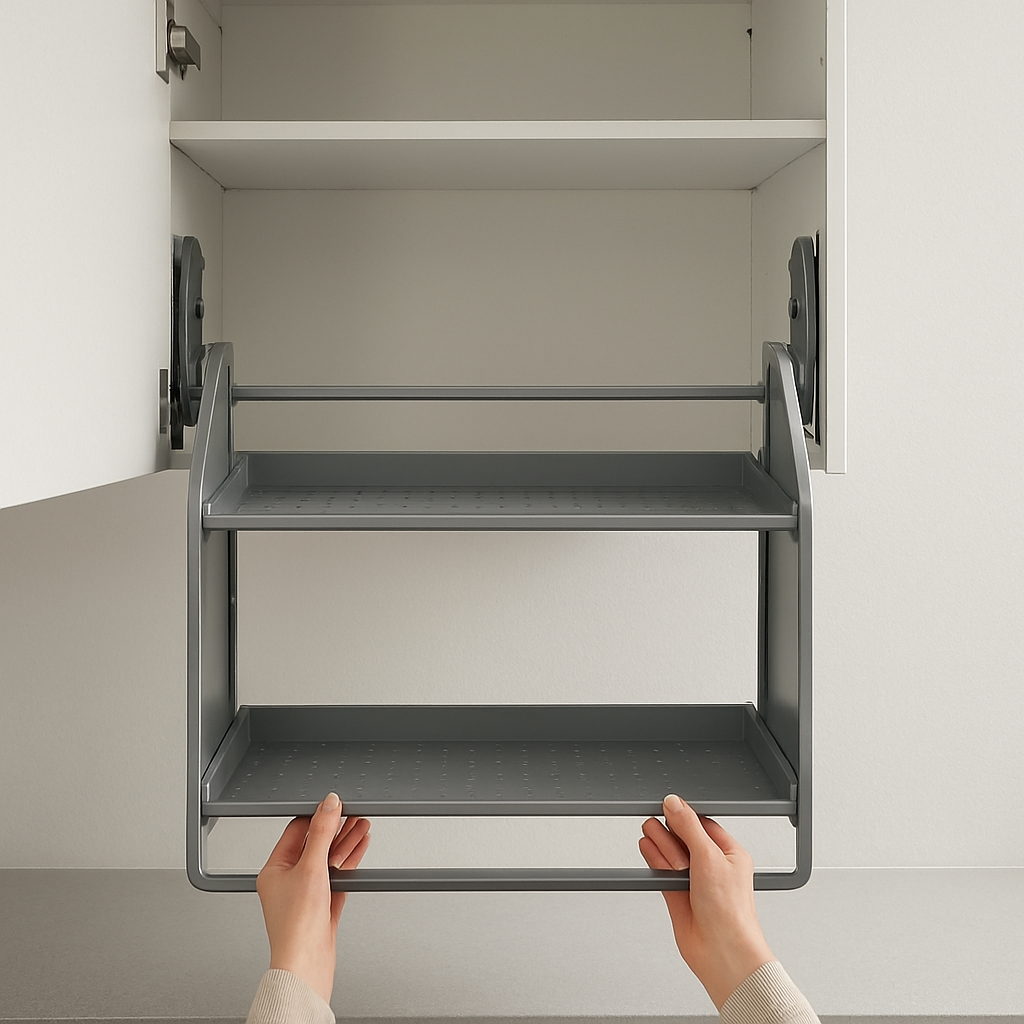
Instead of fetching a step stool, modern engineering brings the storage directly to you. Evaluating lift-up vs. side-swing cabinet door hardware is crucial here; lift-up mechanisms keep doors completely out of your face while you work.
Smart inserts are the secret to maximizing the interior of your cabinet “carcass” and eliminating frustrating, wasted zones. To engineer a truly functional layout, consider these three hardware upgrades:
- Pull-down shelving inserts for high storage access: Gas-assisted racks that glide top-tier serving platters gracefully down to the counter.
- Blind corner wall cabinet storage solutions: Swing-out metal trays that finally rescue lost spices from the dreaded “Dead Corner.”
- Narrow kitchen cabinet pull-outs: Clever mechanisms that transform tiny 9-inch gaps into vertical racks for baking sheets.
Every expanded inch becomes effortlessly usable when you upgrade these internal mechanics.
The Visual Language of Uppers: From Inset Shaker Styles to Integrated Glass Panels
We often focus on countertops, but upper cabinets sit right at eye level, acting as the face of your kitchen. When selecting kitchen cabinet styles, the first major decision is how the doors actually fit. Think of a cabinet door like a framed photograph. Does it sit completely في الداخل the frame for a flush, built-in furniture look (Inset), or does it sit on top to hide the frame entirely (Overlay)?
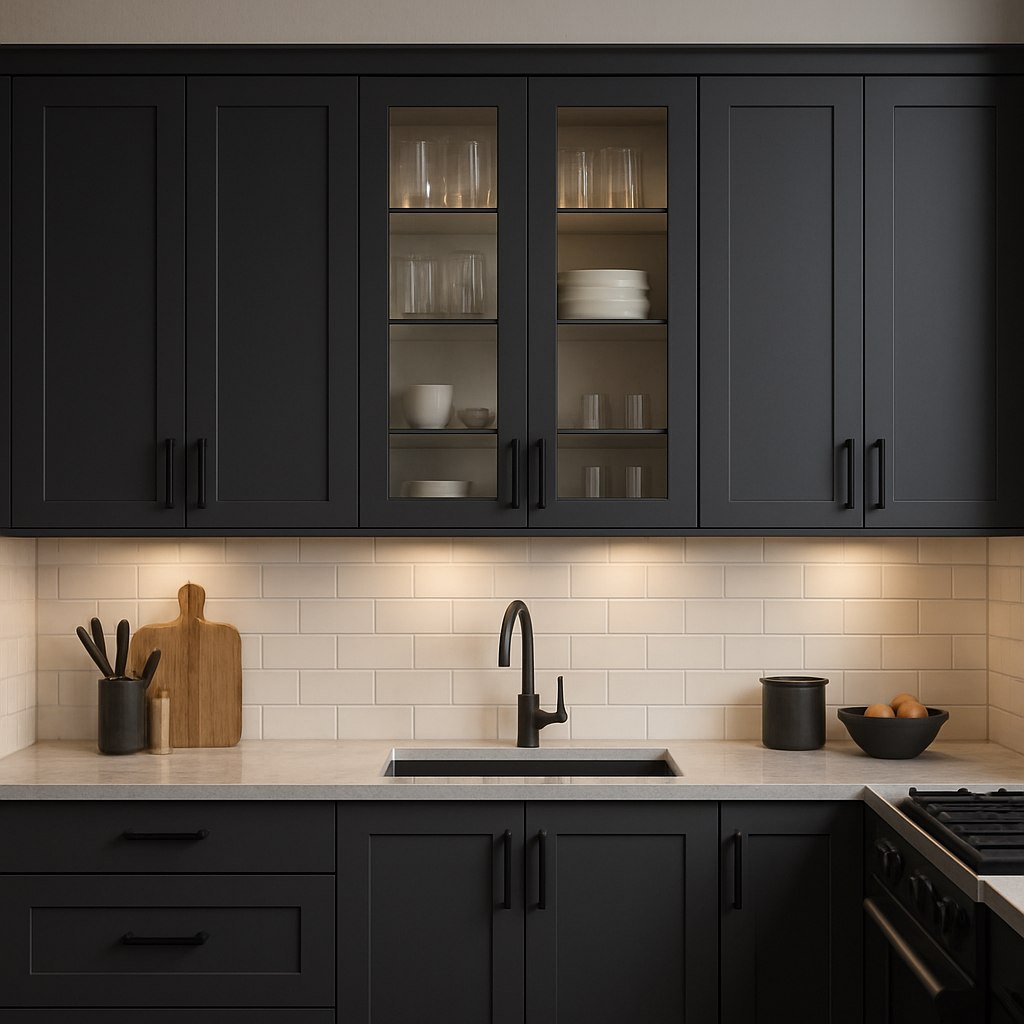
Breaking up solid wooden blocks helps smaller spaces feel grander and more inviting. Introducing integrated glass front door panels for display showcases elegant dinnerware beautifully without exposing it to cooking grease.
This technique looks especially striking in a sophisticated grey-black kitchen, where the reflective glass adds necessary depth to darker tones.
Balancing your morning routine with your visual aesthetic is where true customization shines. Deciding on floating open shelving vs. closed wall units often depends on your dusting tolerance; closed units hide clutter, while shelves keep everyday mugs instantly accessible. Finally, adding crown molding finishes for ceiling-height cabinetry acts as an architectural bridge, permanently closing that dusty top gap while making your ceilings feel taller.
Beautiful woodwork requires more than just an attractive exterior to stand the test of time. Ensuring proper support for heavy glass fronts or thick molding details is critical for long-term safety and durability.
Structural Success: Load-Bearing Requirements and Integrated Task Lighting
Figuring out how high to mount wall cabinets above a countertop is the secret to a comfortable workflow. The industry standard leaves an 18-inch clearance between your work surface and the uppers. This “sweet spot” ensures you have plenty of room to slide a tall blender underneath without blocking your view of the kitchen bottom cabinets below.
Supporting your dishware means understanding the load-bearing requirements for heavy wall-mounted cupboards. Follow this 4-step checklist for ensuring load-bearing wall readiness before mounting heavy cupboards:
- Locate the structural wood studs hidden behind the drywall.
- Verify the installation area is completely free of plumbing lines.
- Estimate the maximum weight of the fully loaded cabinet.
- Secure the framing using specialized heavy-duty mounting screws.
Once securely attached, reviewing an under-cabinet task lighting installation guide becomes the final functional detail. Properly placed light strips eliminate frustrating shadows cast by the uppers, illuminating your prep zones beautifully so you can safely chop vegetables.
Your Blueprint for Better Storage: Navigating the Cost and Customization Journey
Understanding the true cost of kitchen cabinets means looking beyond the initial price tag. While builder-grade cabinets save money upfront, they often leave you with awkward gaps and wasted space. Custom uppers offer incredible daily return on investment by maximizing your kitchen’s functional storage and visual height.
Before searching for local contractors or budget-friendly, ready-to-ship cabinets, outline your must-have features. Armed with terms like scribe molding and 15-inch depth, you can confidently communicate your structural and aesthetic needs to any designer. Thoughtful planning ensures your remodeling investment maximizes both daily function and long-term home value.