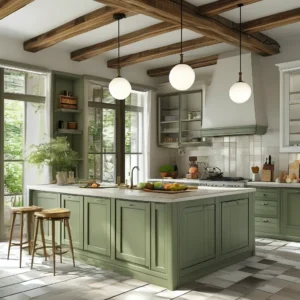
Custom cabinets are a long-term investment, and the difference between a ten-year-old kitchen that looks tired and one that still looks fresh usually comes down to routine care. The good news: modern finishes are engineered to be low-maintenance. YIDA’s cabinets use matte lacquer over MDF, factory baking paint, and E1-grade board — surfaces built to resist daily wear. A simple cleaning habit protects that investment without much effort.
Know Your Finish Before You Clean
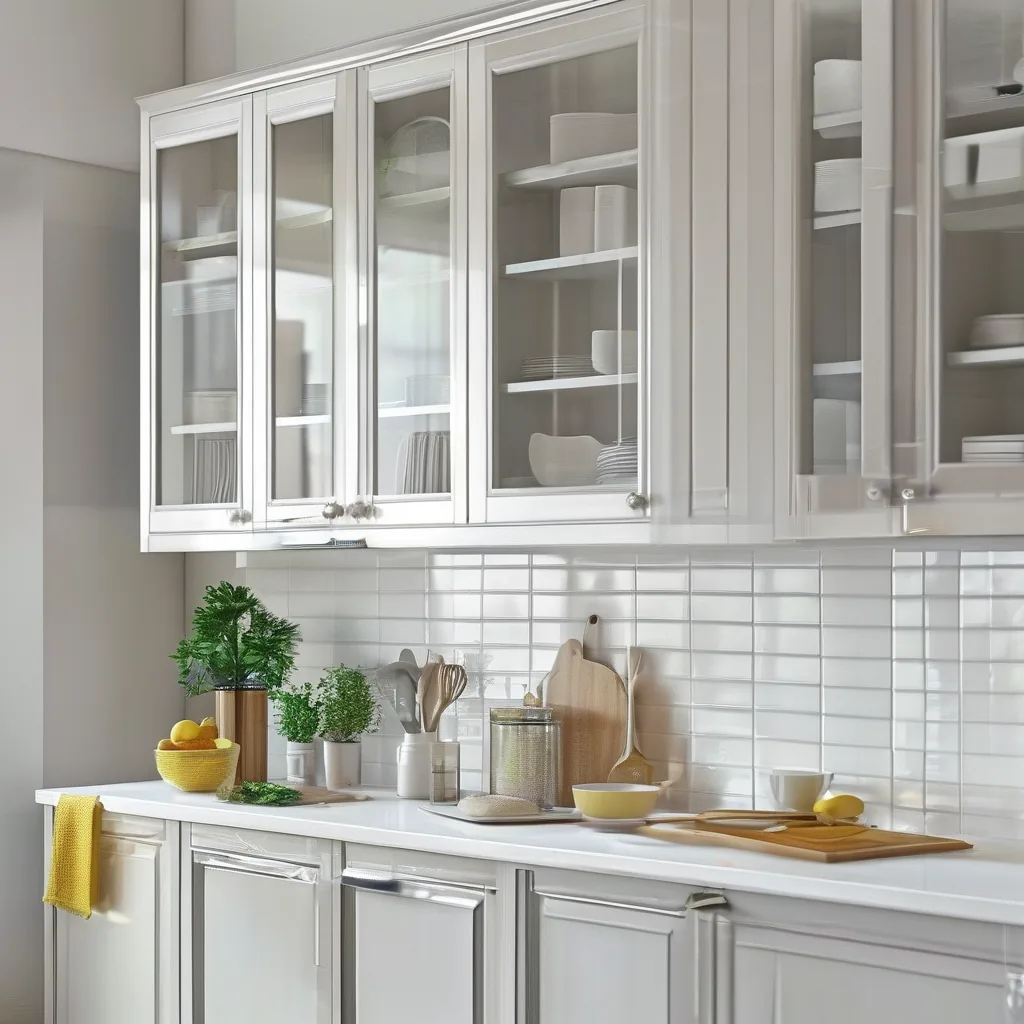
The right cleaner depends on the front finish, so identify it first:
| Finish | How to recognize | What it needs |
|---|---|---|
| Matte lacquer | Smooth, non-reflective, modern | Gentle wipe; no wax or polish that adds shine |
| Baking paint | Even, durable factory coat | Mild soap and water; avoids abrasion |
| Wood veneer | Visible grain | Damp (not wet) cloth; no soaking |
| Laminate | Uniform, slightly textured | Standard all-purpose cleaner, diluted |
Most YIDA fronts are matte lacquer or baking paint — both sealed and easy to keep clean, which is why they’re specified for busy family and project kitchens alike.
Daily and Weekly Cleaning
A two-minute habit prevents most buildup:
- Daily: wipe spills and splashes as they happen with a soft, damp microfiber cloth.
- Weekly: a cloth lightly dampened with warm water and a drop of mild dish soap, followed by a dry wipe.
- Avoid: abrasive scourers, steam cleaners held close to fronts, and bleach-based sprays that can dull a finish.
The goal is to remove film before it sets — especially around handles and the cooktop, where oil aerosols land first.
Cleaning Matte Lacquer Fronts
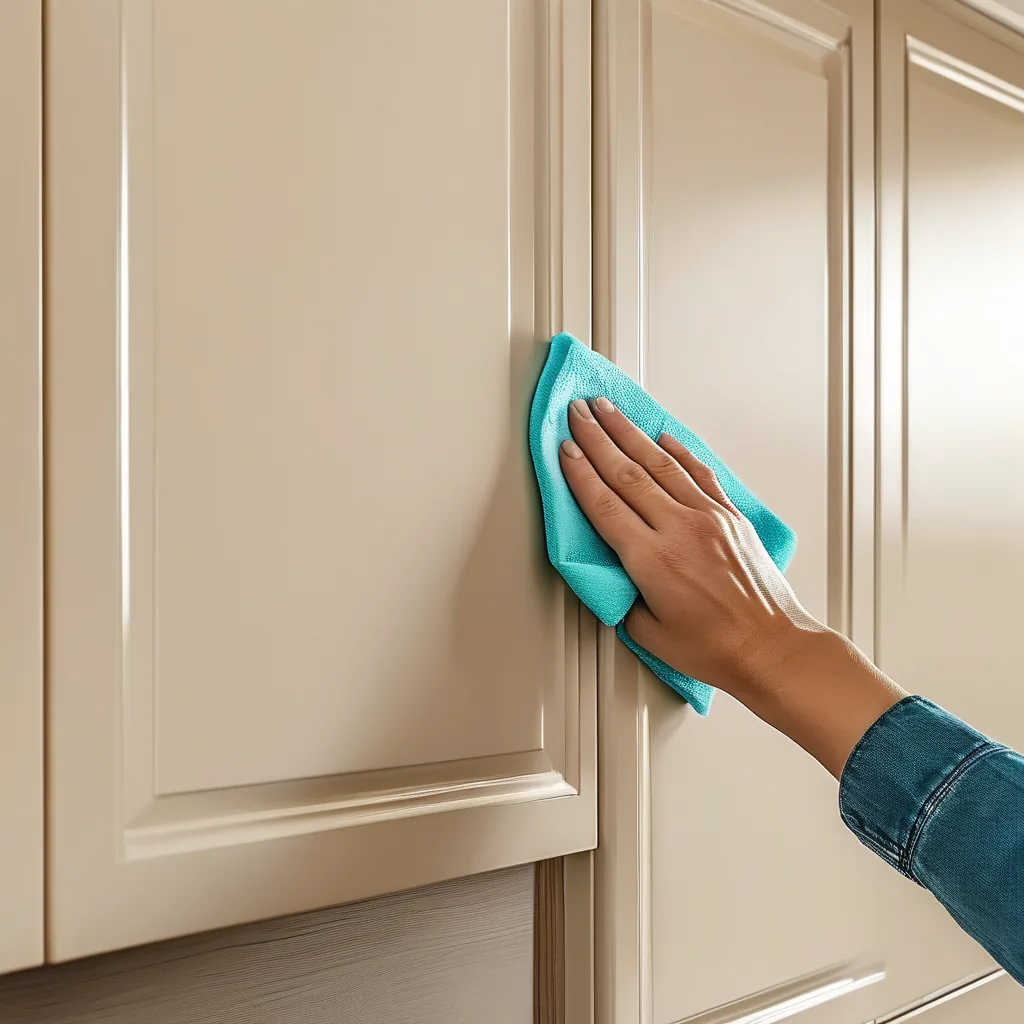
Matte lacquer is fingerprint-resistant by design (the same reason black matte programs stay presentable between cleans), but it still benefits from a gentle touch:
- Use a dry or lightly damp microfiber — microfibers lift oil without pressure.
- Skip furniture polish and wax. They’re made for gloss and will leave a sheen on a matte surface you can’t easily undo.
- For marks, a 50/50 mix of water and white vinegar on the cloth (not sprayed directly) handles most spots; rinse with a damp cloth and dry.
Because the surface is sealed, you’re cleaning the finish, not the substrate — so moisture should never sit.
Tackling Grease and Stubborn Spots
Grease concentrates above the range and near the hood. For those zones:
- Apply a diluted degreaser (or a few drops of dish soap) to the cloth, not straight onto the cabinet.
- Work in the direction of the panel; rinse the cloth and wipe again to remove residue.
- Test any new product on an inconspicuous area first — especially on painted fronts.
A baking-paint front shrugs off light scuffs better than many finishes, but letting degreaser dwell defeats any coating, so wipe it off promptly.
Hardware Upkeep That Pays Off
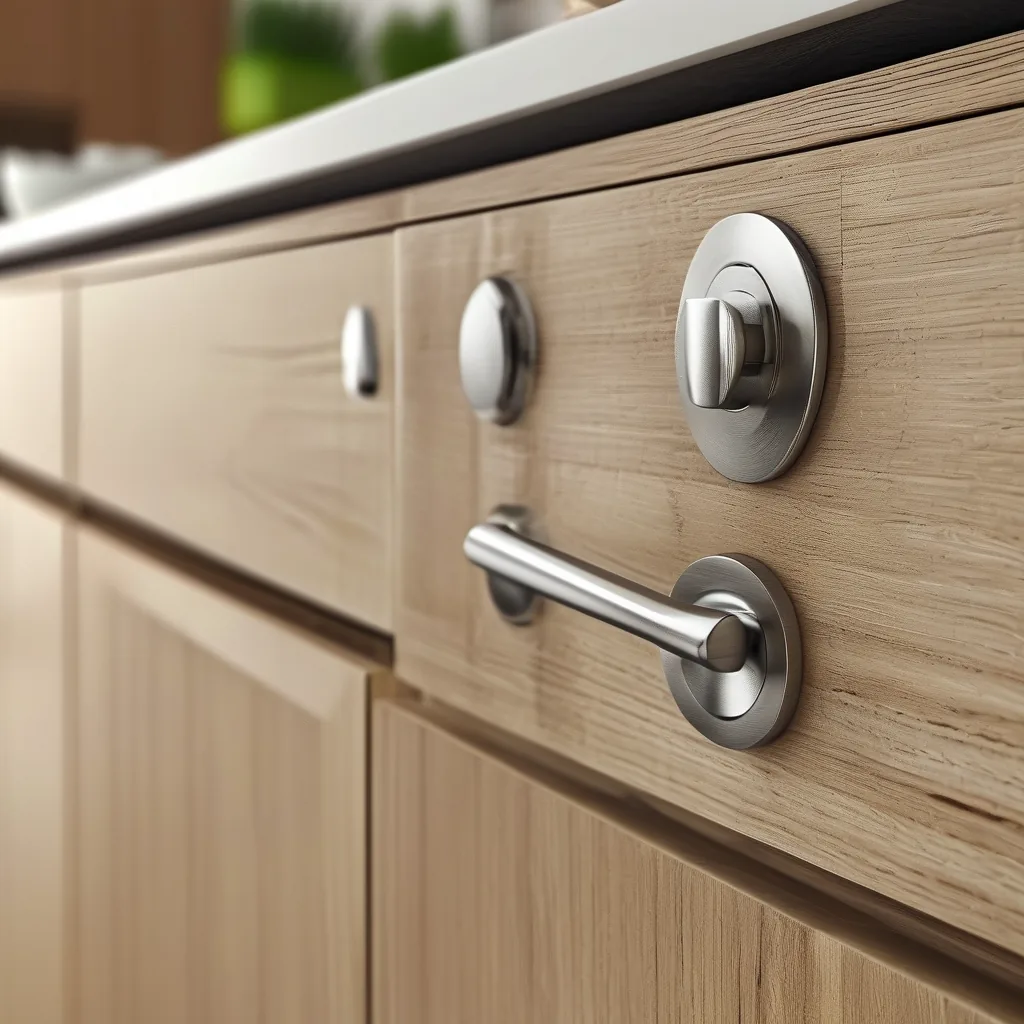
Hinges and slides do the quiet, heavy work. YIDA specifies Blum-class, OPK, or Nuomi hardware, but even good hardware likes attention:
- Keep hinges and screw heads dry — moisture is the enemy of moving parts.
- Tighten loose handles promptly so doors don’t drift and rub.
- Check slides once or twice a year; a dry, lint-free wipe keeps them smooth (avoid oiling unless the manufacturer recommends it).
Catching a loose screw early prevents the door misalignment that leads to edge chipping.
Protect Cabinets from Moisture and Heat
Two enemies shorten cabinet life more than dirt:
- Moisture: don’t leave wet cloths on countertops against the base; wipe up leaks under the sink immediately. The E1-grade board substrate is chosen for safer indoor air, but like any wood-based panel it dislikes prolonged damp.
- Heat: keep cabinets clear of the oven’s direct exhaust and avoid placing hot items against a front. Good extraction above the cooktop does most of this work.
Sealed edges and a ventilated kitchen are your baseline defense.
Habits That Extend Cabinet Life
Small behaviors add up:
- Open doors by the handle, not the front edge, to avoid torsion.
- Don’t hang heavy items (towels, bags) on doors — use hooks or organizers instead.
- Use in-cabinet organizers (pull-outs, dividers) so doors aren’t slammed in the search for items.
- Keep the range hood running while cooking to cut grease fallout.
None of these cost anything, and together they preserve both finish and structure.
Why Well-Built Cabinets Need Less Care

Care is easier when the cabinet starts right. YIDA builds each unit with 100% pre-shipment trial assembly — every cabinet is constructed and checked as a complete unit before it leaves the factory, which is how production error rates stay near 0.1%. Durable lacquer and baking-paint finishes, sealed edges, and quality hardware mean fewer defects to maintain and a longer good-looking life.
If you’re specifying new cabinets, factor care into the finish choice: a matte lacquer front in a busy household is less work than high-gloss, and a sealed, factory-finished panel outperforms field-finished one. See the kitchen cabinet materials guide and the hardware and storage systems guide for the trade-offs.
Planning a new kitchen? Send your project details and floor plan via the contact page for a free 3D design and a quotation within 24 hours — specified with finishes and hardware chosen for easy, long-term care.