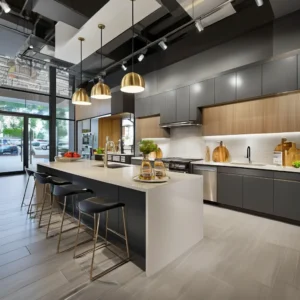
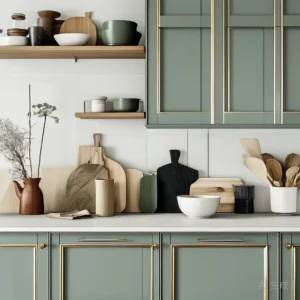
Custom cabinets are not pulled from a shelf — they are engineered, cut, finished, and verified for one specific space. Understanding the process helps buyers set realistic timelines, ask better questions, and avoid the “it didn’t fit” surprises that plague poorly managed projects.
Here is how a vertically integrated manufacturer takes a custom cabinet from a 3D concept to a flawless installation — using the workflow YIDA HOME applies across kitchens, wardrobes, and bathroom vanities.

Step 1 — Design and Measurement
Everything starts with the space, not the catalog.
- Free 3D design service lets you see exactly how your custom cabinets will look before you buy — no guesswork.
- 2D & 3D drawings are produced for the entire project, giving contractors and installers a precise blueprint.
- On-site measurement is available when required, so dimensions reflect the real wall, not the plan.
This step turns a vague brief (“modern, more storage”) into a measurable specification. For large projects, it also de-risks later phases: the drawing everyone approves is the drawing that gets built.
Step 2 — Intelligent Design-to-Production Integration
The gap between “approved design” and “factory output” is where most errors are born. An IDPI intelligent system — a design-to-production integration platform continuously upgraded since 2013 — closes that gap by feeding approved drawings directly into manufacturing with minimal manual translation.
The payoff is consistency: the same parametric logic that generated your 3D view drives the cut list, the CNC program, and the QC checklist. Fewer handoffs means fewer mismatches.
Step 3 — CNC Precision Manufacturing
With the digital model locked, production moves to the floor.
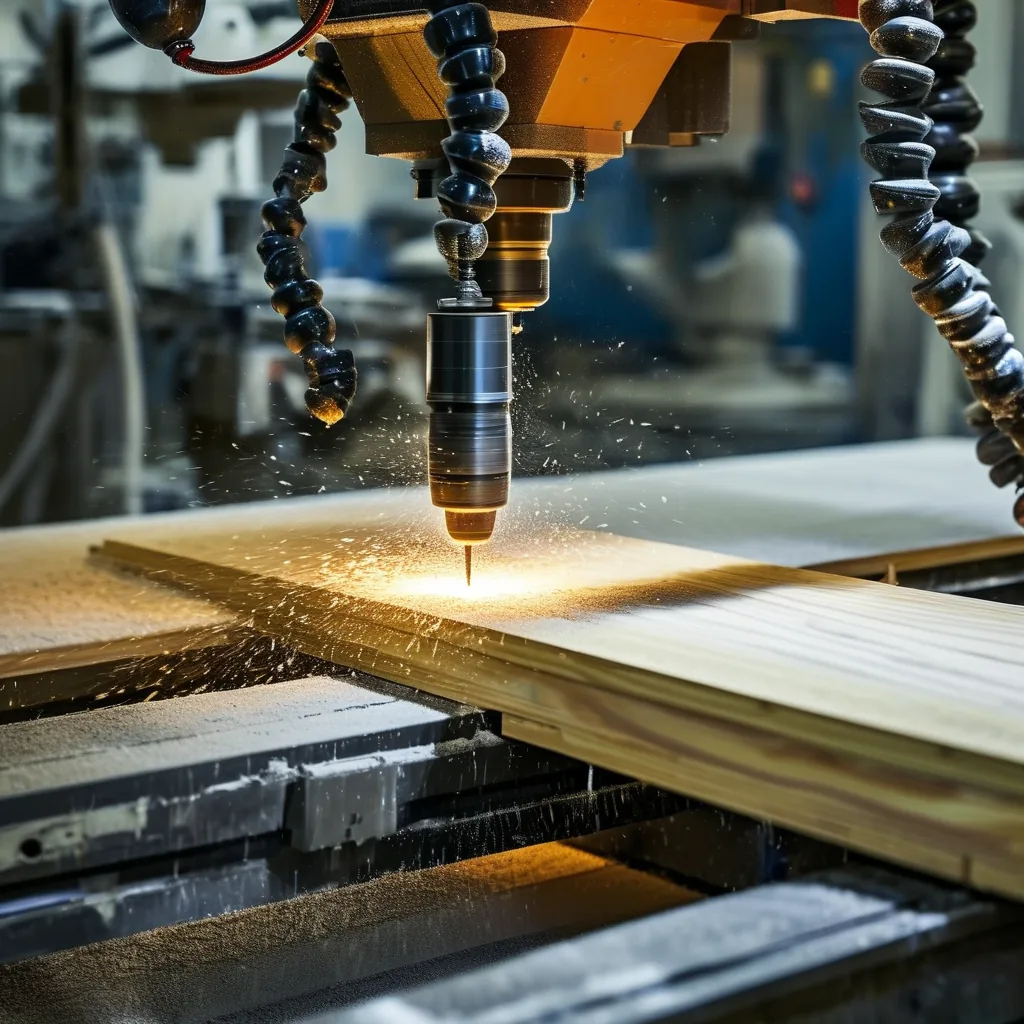
- 10 Industrial 4.0 production lines at the 80,000㎡ Foshan base handle high-volume, high-mix output.
- CNC-enabled production management ensures precision, consistency, and efficient resource utilization across batches.
- Annual capacity reaches 200,000+ cabinets, so a single large development doesn’t crowd out other orders.
CNC control is what lets a manufacturer promise both scale and tolerance — the same spec holds from unit #1 to unit #825.

Step 4 — Pre-Shipment Trial Assembly and QA
This is the most overlooked — and most valuable — step in custom cabinetry.
- 100% pre-delivery trial assembly: every kitchen, wardrobe, and bathroom cabinet is test-assembled before shipping to confirm it fits and functions.
- Advanced systems drive a measured production error rate as low as 0.1%.
- Comprehensive after-sales support closes the loop after installation.
Pre-shipment trial assembly converts “we’ll fix it on site” into “it already fits.” For multi-unit projects, that single step protects timelines and homeowner satisfaction more than almost anything else.
Step 5 — Packaging and Logistics
Delivery is tailored to how you install and finance.
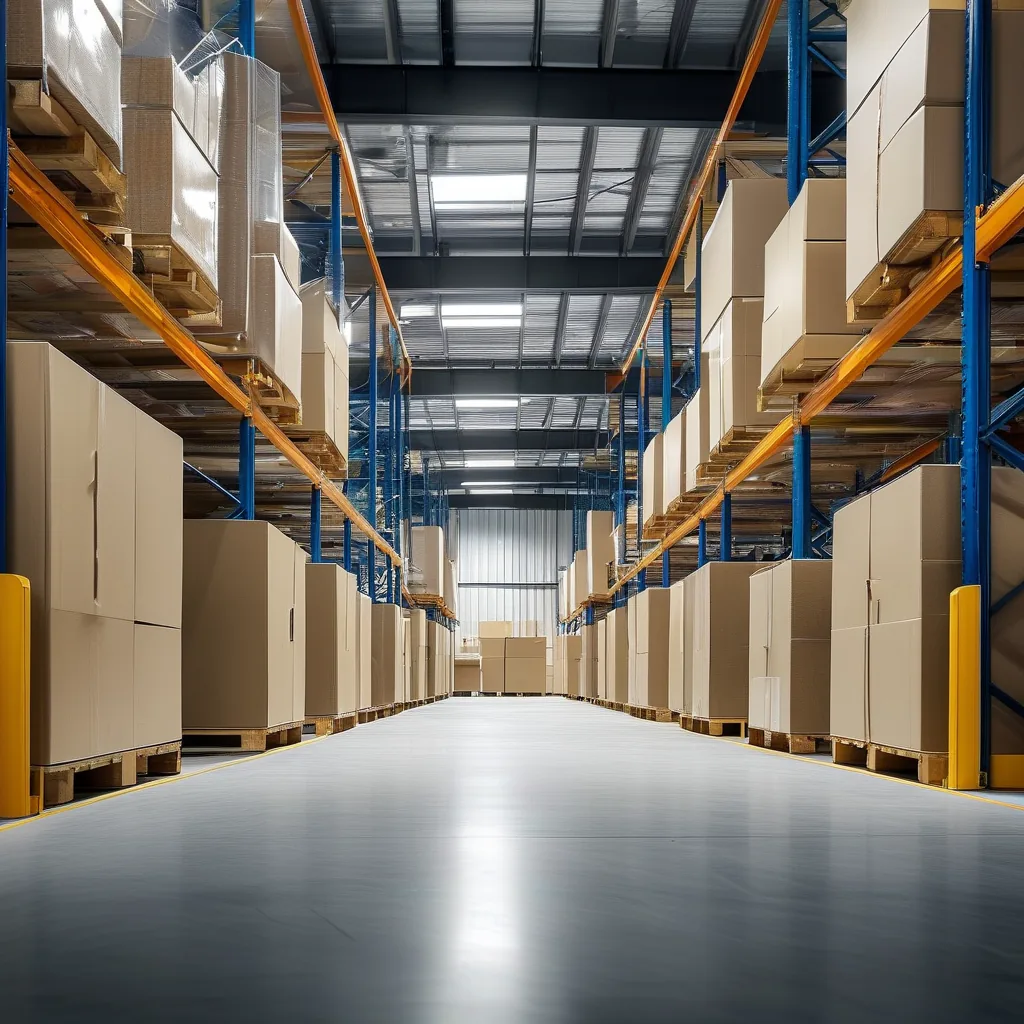
- Flat-pack or assembled-pack options match your labor model — flat-pack saves freight; assembled-pack saves on-site time.
- Partial deliveries align with your construction phases, so you are not warehousing hundreds of kitchens before phase one starts.
- Each shipment ships with a clear packing list and the customs-clearance files needed for cross-border moves.
- Flexible FOB / CIF / DDU / DDP terms let you allocate logistics risk per order.
Step 6 — Installation and Remote Support
The cabinet’s job isn’t done at the dock.
- A team of 300+ professional installers with overseas project expertise can be dispatched, or an assembly team sent to site when needed.
- Remote support — installation videos and live technical consultations — keeps global projects moving without waiting for a flown-in specialist.
- For big orders, a mock-up of kitchen cabinet and wardrobe is built first to confirm every detail before volume production.
This combination means a project in Riyadh or a villa program in Saudi Arabia gets the same guidance as one built next to the factory.
Timeline Reality Check
A transparent process also sets honest expectations. Phases overlap, but a typical flow looks like:
- Design + measurement → 2D/3D approval
- Mock-up confirmation (large orders)
- Production schedule + CNC manufacturing
- Pre-shipment trial assembly + QC
- Phased packing + partial delivery
- On-site or remote-supported installation
Manufacturers using localized inventory buffers (e.g., a Mexico warehouse) can compress lead time by roughly 30% on restocks and near-shore orders — worth factoring into your schedule.
Why the Process Matters for Buyers
A great cabinet is the output of a great system. When design, production, QA, and support are owned by one partner — backed by an IDPI system, CNC precision, 100% pre-shipment trial assembly, and a 300+ installer network — you trade “hope it fits” for “it’s verified.”
Curious what your space could look like? Request a free 3D design or explore delivered projects to see the process in finished form.
Recommended for project & procurement teams: Plan contract-grade cabinetry with our Custom Cabinets for Hotels & Hospitality Projects: A B2B Specification Guide — a B2B specification guide covering SASO/CE compliance, MOQ, lead times, and finish standards for hotels, serviced apartments, and multi-unit developments.